How Do You Beat an All-Cash Offer When You Need a Mortgage?
How Do You Beat an All-Cash Offer When You Need a Mortgage?
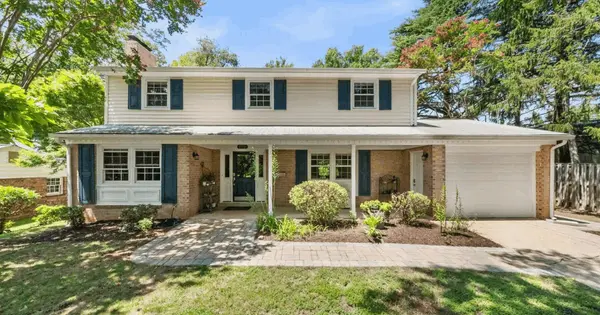
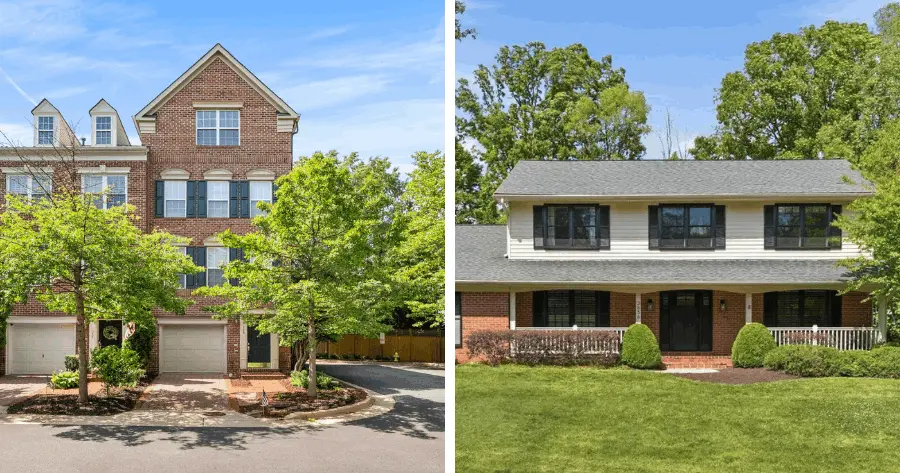
Our clients owned a 2,400-square-foot townhouse in Cameron Station with three bedrooms, two and a half baths, and two young children who had outgrown it. They wanted a larger single-family home closer to family in Montgomery County. The Vienna house they found, five bedrooms and three and a half baths across 3,946 square feet, drew an all-cash offer. They needed financing and they won anyway, paying $1,505,000 against a $1,450,000 list price and going under contract four days after it came on the market. It closed June 12, 2026.
They were past clients. They'd also lost one or two houses before this one, which matters to how the story ends.
Why were they moving?
Two reasons, and the second one shaped the map.
Their family had outgrown the townhouse. Two young children in 2,400 square feet with three bedrooms, and they wanted room to settle into for the long term rather than move again in four years.
They also wanted to be closer to family in Montgomery County. That turned an open-ended search into a specific one, because convenient access toward I-495 became a requirement rather than a preference.
Why did we buy before selling?
Because the purchase was the hard part and the sale was the easy part, and you don't want a deadline attached to the hard part.
Their Cameron Station townhouse would find a buyer. A larger, updated single-family home in Fairfax County with strong schools around $1.3 to $1.5 million is a much scarcer thing. So I recommended against selling first.
This mattered more than it might sound. They lost one or two houses before finding the right one. If they'd already sold Cameron Station, each of those losses would have carried real consequence, and at some point a housing deadline starts choosing your house for you.
Instead the losses were just disappointing. They could keep waiting for the right one.
Why did the budget have to move?
Because $1.3 million and $1.5 million buy genuinely different things in this market, and they deserved to see that before deciding.
They started hoping to stay under about $1.3 million. As we worked through the areas they were considering, it became clear how thin the supply was at that number for what they actually wanted: four-plus bedrooms, 3,000-plus square feet, updated, with school ratings they felt good about.
My job wasn't to push them upward. It was to show them concretely what each price point purchased so they could decide whether the difference justified the money. They moved to roughly $1.5 million, and it did.
Where did we look?
Four areas, chosen for how they balanced schools, housing stock, value, and the drive toward Montgomery County: West Springfield, parts of Annandale, Vienna, and Oakton.
Each traded differently. Some gave more house for the money and a longer drive. Some had the schools but not the inventory at their price.
Vienna won on the house itself, and then something we hadn't planned for tipped it: they already had a friend living in the neighborhood. That's not a criterion anyone writes on a list, and it's a real one. Moving into a community where you already know somebody is a different experience from moving into one where you don't.
How do you beat an all-cash offer?
You stop competing on the thing cash is good at.
Cash doesn't win because it's more money. It wins because it's more certain and usually faster. No appraisal risk, no financing contingency, no lender who might change their mind in week three. When a seller takes cash over a higher financed offer, they're buying peace of mind.
So a financed offer has to close that gap somewhere other than price. That means knowing what this particular seller cares about, which you only find out by asking.
We stayed in constant communication with the listing agent through the whole process. Not to be pleasant, though that helps, but to understand what would actually matter when the seller sat down with the offers in front of them. Then we structured the escalation addendum and the rest of the terms around that.
Cash doesn't win on the number. It wins on certainty. So we built the offer to be certain.
We'd also connected them with a financing option carrying a significantly lower rate, which did two things: it made the higher budget manageable month to month, and it made the financed side of the offer more solid at the moment it needed to be.
What happened?
The house came on the market May 14 and they were under contract May 18.
They paid $1,505,000 against a $1,450,000 asking price, which is $55,000 over, and closed June 12, 2026. The all-cash buyer didn't get it.
They got the space, a fully updated house with more than $250,000 in improvements made since 2019, the schools they wanted, an easier drive to family in Montgomery County, and a neighbor they already knew.
And they moved in before selling Cameron Station, which is the part that made the whole thing calm instead of frantic.
Why the selling strategy is different
Their townhouse is on the market now, and we're approaching it differently than we approached the purchase. Deliberately.
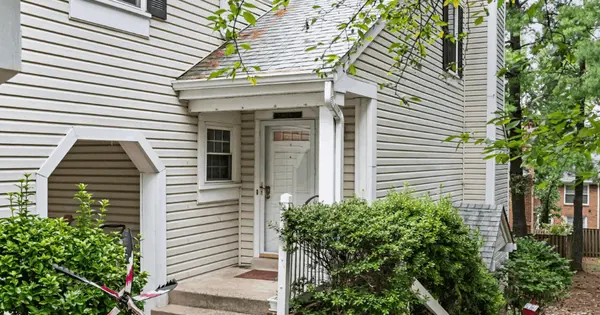
The buying market they competed in was active, which put the emphasis on terms, speed, and understanding the other side. The selling market they're entering is slower, with less buyer activity. In that environment we're comfortable starting at a higher, defensible number, because buyers in a slow market expect to negotiate and pricing to the bone leaves nothing to give. You can see the Cameron Station townhouse and the property video if you want to see how we're presenting it.
That's the same clients, the same team, the same year, and two strategies that would each be wrong applied to the other transaction.
What I'd tell someone in the same position
Don't assume you sell first.
Work out what you can financially do before you list anything, then ask which of the two transactions is genuinely harder. If the purchase is the difficult one, and in a market like this it usually is, protect it. Selling first hands your hardest decision a deadline.
Then be honest that the strategy has to fit the market you're actually standing in, not the market you read about last year. The approach that wins a house in an active spring is not the approach that sells one in a slow autumn. Anyone who runs the same playbook in both isn't paying attention to one of them.
Frequently Asked Questions
How do you beat an all-cash offer when you need a mortgage?
By finding out what the seller actually values and building the offer around that rather than assuming price decides it. Cash wins on certainty and speed, not on the number, so a financed offer has to close that gap somewhere else: how the escalation addendum is structured, the contingency terms, the timeline, and how credible the buyer looks. On this Vienna purchase we stayed in constant contact with the listing agent to understand what mattered to the seller, then structured the escalation and the terms accordingly. Our clients paid $1,505,000 against a $1,450,000 list price and were under contract four days after the house came on the market, beating an all-cash buyer.
Should you buy before you sell, or sell before you buy?
Solve the harder problem first, and for most move-up buyers that is the purchase. These clients owned a townhouse in Cameron Station that would sell readily and were shopping for a family-sized single-family home with strong schools in Fairfax County, which is a far scarcer thing. Selling first would have put a housing deadline behind every showing, and they had already lost one or two houses before finding this one. Buying first meant those losses were disappointing rather than dangerous.
Is it worth raising your budget to get the house you want?
It depends on whether the extra money buys a materially different set of options or just a slightly better version of the same ones. These clients started at approximately $1.3 million and moved to roughly $1.5 million. That was not encouragement to spend more; it was showing them what each price point realistically purchased in the areas they were considering and letting them decide whether the gap was worth it. In this segment of Fairfax County the difference between those two numbers is substantial.
Why would an agent use a different strategy to sell than to buy?
Because the market conditions on each side are not the same, and a strategy that fits one can be wrong for the other. These clients bought during an active spring market where the emphasis fell on terms, communication, and understanding what would make an offer stand out. Their townhouse is going to market in a slower stretch with less buyer activity, where the approach shifts toward starting at a defensible price with room for a buyer to negotiate. There is no single strategy that works for every property in every season.
What makes the $1.3 to $1.5 million range in Fairfax County so difficult?
It is where the demand for family-sized homes with strong school assignment concentrates. Buyers looking for four or more bedrooms, three thousand square feet or more, updated condition, and highly rated schools are all shopping the same relatively small pool, and it thins further when you add a specific commute requirement. These clients needed convenient access toward Montgomery County, which narrowed the geography before they ever looked at a house.
About the author
Blake Davenport is the founder of The Davenport Group at TTR Sotheby's International Realty, the #1 real estate team in Arlington, VA by sales volume for three consecutive years per BrightMLS. He and his wife Leah started the team in 2016 and work across Arlington, Alexandria, Vienna, McLean, Falls Church, and the broader Northern Virginia market. A large share of his work is with families moving up out of townhouses into single-family homes, where the purchase is the harder transaction and has to be protected.
Facing the same move?
If you own a townhouse and you're weighing a move up, the first question isn't which house. It's which transaction is harder and how you protect it. We'll work that out with you before anything gets listed.
Schedule a call with The Davenport Group
Recent Posts