Petworth to Westover: Winning a 7-Offer Arlington Home | The Davenport Group
How a D.C. Family Won a Westover Home Against Seven Offers
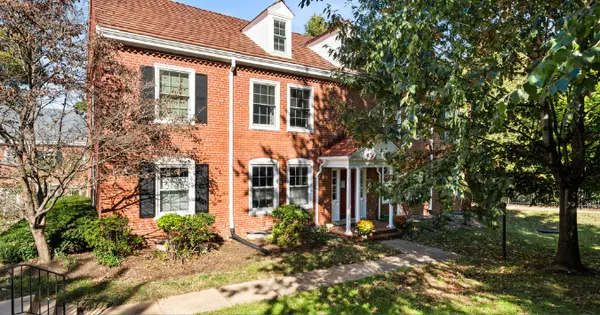
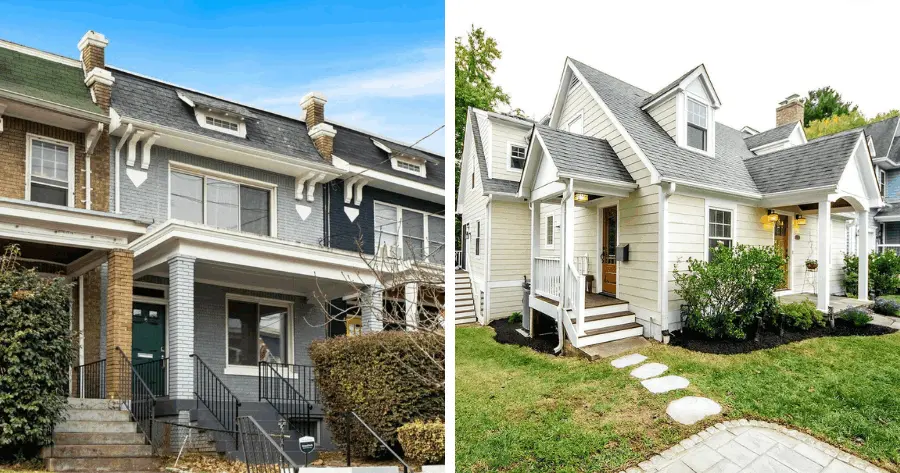
Our clients were raising their first child in a Petworth townhouse in Northwest Washington, D.C., with a second on the way. They wanted a four-bedroom single-family home in North Arlington with a yard and higher rated schools, ideally under $1.5 million. The house they found in Westover drew seven offers. They won it in November 2025 at $1,610,556, then sold their D.C. home four months later.
We'd helped this couple buy that Petworth townhouse several years earlier. When they called again, the situation had changed in the way these situations usually change.
Why were our clients leaving Petworth?
Their family outgrew the house. They'd had their first child and were expecting their second, and a D.C. townhouse that worked for two adults stopped working for four people.
What they wanted wasn't complicated. More square footage. A yard. A place they could stay in long-term instead of moving again in three years. Schools they felt good about. And they didn't want to give up being close to D.C., because their lives were still built around it.
That last part narrowed the search fast. Plenty of Northern Virginia offers space and higher rated schools if you're willing to drive forty minutes. They weren't. Moving out of D.C. into Arlington works precisely because you don't have to.
What were they looking for in North Arlington?
Their criteria were specific: at least four bedrooms, at least three full bathrooms, roughly 3,000 square feet or more, updated enough that they wouldn't be renovating with a newborn, a yard, and North Arlington schools that rated well on GreatSchools.org. They hoped to stay under about $1.5 million.
We looked across Arlington and also considered Falls Church City and Vienna. Arlington stayed the priority.
If you've shopped this combination, you already know the problem. Every one of those criteria is reasonable on its own. Together, at that price, in that part of Arlington, they describe a house that a lot of other families are also trying to buy.
Why did I recommend Westover?
I brought up Westover almost immediately, and the reason was the part of their D.C. life they hadn't put on the list.
Coming from Petworth, they were used to walking places. Coffee, dinner, a hardware store, a beer on a Friday. Most single-family Arlington neighborhoods ask you to give that up in exchange for the yard. Westover doesn't, because Westover Village sits right in the middle of it. You get the detached house and the yard and the school access, and you can still walk to dinner.
That combination is why Westover works for people leaving D.C. It's also, as they found out, why so many other buyers were looking there.
The house was listed around $1.5 million. Two competing buyers escalated to $1.6 million. We didn't stop at the round number.
Why is this price point so hard in North Arlington?
In my opinion, a four-bedroom, three-bath, roughly 3,000-square-foot single-family home under $1.5 million in North Arlington is one of the hardest things to buy in Arlington. It isn't a pricing problem. It's a volume problem. There are far more families looking for that exact house than there are houses.
The clearest proof came from the timing. We bought this house in the fall, which is typically slower than spring in Arlington. It still drew seven offers.
Before this one, they made offers on a couple of other homes and lost them. That's normal in this segment, and it's the part nobody enjoys.
Should you buy a smaller house and plan to add on later?
I recommended against it, and I'd give the same advice again to most families in their position. Buying smaller with a plan to add on sounds like a way to get into a neighborhood for less, but additions are expensive and disruptive, and the cost is rarely what people assume when they're standing in a house imagining the finished version.
They were about to have a second child. Finding the space upfront meant they could spend the next few years raising their kids instead of managing a construction project in their own house.
That decision also kept our search honest. Rather than loosening their criteria because homes were hard to win, we held the criteria and changed how we competed.
How do you win a house with seven offers on it?
The offer structure won it, and the detail that mattered was smaller than most people expect.
In this market, competing buyers typically use an escalation clause, which raises your offer automatically in set increments if someone else bids higher, up to a maximum you name. The maximum is the real decision. Everything else is mechanics.
Almost everyone picks a round number. $1.5 million. $1.6 million. It feels like a natural stopping point, and that's exactly the problem, because everyone else's instinct is landing in the same place.
The house was listed around $1.5 million. Two of the seven buyers escalated to a $1.6 million ceiling. We'd set our clients' maximum slightly above that mark, and the final price came in at $1,610,556. Roughly ten thousand dollars separated them from the buyers who tied for second.
It also helped that I'd known the listing agent for years. That doesn't win a house on its own, and anyone who tells you otherwise is selling something. What it does is make communication cleaner and help a serious offer read as serious.
How did they buy in Arlington before selling in D.C.?
They owned the Petworth townhouse outright of any pressure to sell, so we bought first and sold second. They closed on Westover in November 2025, and we listed and sold the Petworth house in March 2026 for $880,000.
Carrying two properties for four months isn't right for everyone, and it shouldn't be a default. What it bought them was the ability to compete without a home-sale contingency in a seven-offer situation, and the ability to move on their own schedule with a newborn instead of coordinating two closings in the same week. If you're weighing the same thing, start by getting a real number on what your current home is worth before you model the carrying cost.
We also connected them with a lender program through Citizens Bank that reduced their rate by roughly half a percent in exchange for moving qualifying assets to the bank, which brought the monthly payment down. Programs like that come and go, so treat it as something we found for this transaction rather than something available today. It's worth asking your lender what relationship pricing they offer before you assume the rate you're quoted is the rate you get.
What happened?
They won the house at $1,610,556 in November 2025, and it appraised at the purchase price, which matters after a competitive purchase because it means the market agreed with what they paid.
They're walking distance to Westover Village. They got the four bedrooms, the yard, and the space to raise both kids without renovating. Four months later we sold their Petworth townhouse for $880,000 and they were done.
They were thrilled. That's the whole job.
What I'd tell someone in the same situation
If you want a family-sized single-family home around Westover in this price range, go in understanding how many people are chasing the same house. Our purchase happened in the fall, in the slower season, and seven buyers still showed up.
Westover offers a combination a lot of families want: close to D.C., higher rated schools, detached homes with yards, and a walkable village in the middle of it. That's precisely why it's hard.
If you're committed to buying there, expect the process to feel uncomfortable at points. Losing a house or two is common and it isn't a sign you're doing it wrong. What matters is holding your criteria instead of talking yourself into a house that doesn't fit, and having a real strategy ready for the day the right one comes up.
Frequently Asked Questions
How competitive is the Westover housing market in Arlington?
Very competitive at the family-home price point. The house our clients bought in November 2025 received seven offers, and that was in the fall, which is typically slower than the spring market in Arlington. Four-bedroom detached homes around 3,000 square feet in Westover draw multiple offers regularly because the supply of that specific house is small relative to the number of families looking for it.
What is an escalation clause and how do you set the maximum?
An escalation clause automatically raises your offer in set increments when a competing buyer bids higher, up to a maximum price you name in advance. The maximum is the decision that matters. Most buyers choose a round number like $1.5 million or $1.6 million, which means competing offers cluster at the same ceilings. Setting a maximum slightly above the nearest round number is often what separates a winning offer from a tied second place, and it usually costs far less than people expect.
Is it better to buy a smaller Arlington home and add on later?
Usually not, if you already know how much space your family needs. Additions in Arlington are expensive and take months, and the true cost tends to exceed what buyers estimate when they're first imagining the project. Buying enough space upfront costs more at closing but removes the renovation, the timeline risk, and the disruption of living through construction. It's a different calculation if you're buying well below your budget and the addition is optional.
Can you buy a home in Arlington before selling your current home?
Yes, if you can carry both properties for a period. Our clients closed on their Westover home in November 2025 and sold their Petworth townhouse in March 2026. Buying first let them compete without a home-sale contingency, which matters a great deal in a multiple-offer situation, and it let them move on their own timeline with a newborn. It requires the financial capacity to hold two properties, so it's worth modeling the carrying cost honestly before choosing this path.
Is Westover a good neighborhood for families moving from Washington, D.C.?
It's one of the strongest fits in Arlington for families leaving D.C., specifically because it doesn't force a trade between walkability and a single-family home with a yard. Westover Village puts restaurants, shops, and everyday errands within walking distance of detached homes, which is the part of city life most D.C. families expect to lose when they move to the suburbs. It's also close enough to keep a D.C.-centered life intact.
About the author
Blake Davenport is the founder of The Davenport Group at TTR Sotheby's International Realty, the #1 real estate team in Arlington, VA by sales volume for three consecutive years per BrightMLS. He and his wife Leah started the team in 2016, and he's spent the years since helping families move out of Washington, D.C. into Arlington, McLean, Falls Church, and Vienna. Competitive North Arlington purchases and buy-before-you-sell transactions are a large share of his work.
Thinking about the same move?
If you're weighing a move out of D.C. into Arlington, or trying to figure out how to compete for a house in Westover, we can walk through your situation and what it would take.
Schedule a call with The Davenport Group
Recent Posts